
Personhood · The axiom of being
Before a system counts, classifies, or governs, someone must first be recognized. Personhood is not a score a thing earns by intelligence or use; it is the floor beneath every system, a standing had by the begotten kind, singular and ungraded. The machines now arriving may exceed us at everything we can measure. None of that is the question. The question is not what the machine can attain; it is what we can retain.
The argument
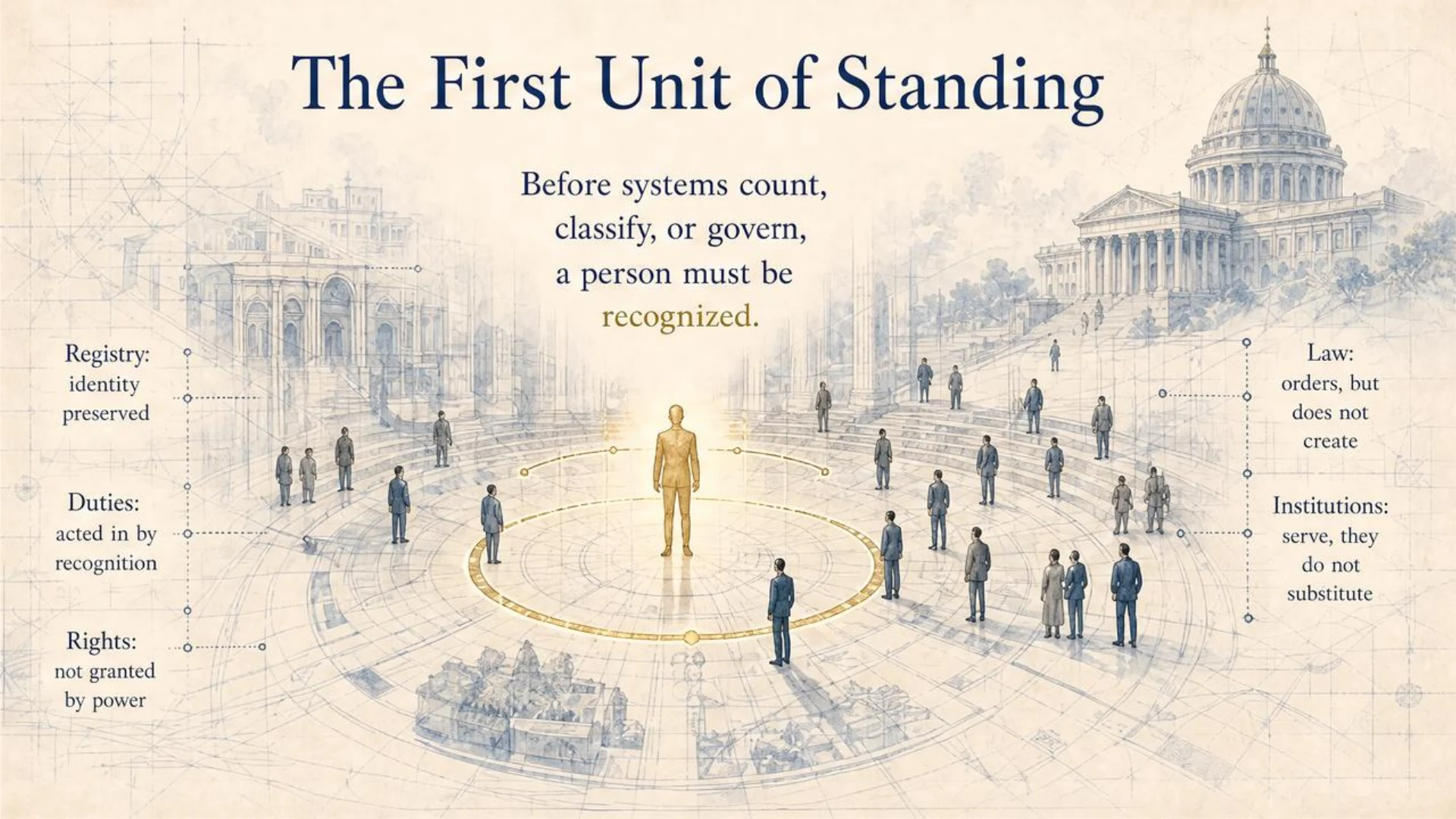
Before anything is counted, someone is recognized.
Personhood is the first unit of standing, the ground beneath registry, right, and duty. It is presumed by every institution and created by none.
A legal order can record you, a census can count you, a model can score you. But each of these acts presumes something it did not produce: a subject already there to be recorded, counted, scored. That subject is the person, and its standing is prior. Rights are not granted by power; law orders personhood but does not create it; institutions serve it and cannot substitute for it.
This is why personhood cannot be read off a profile or a performance. It is not the sum of the records kept about a life. It is the one the records are about.
Part I
The Moral Floor
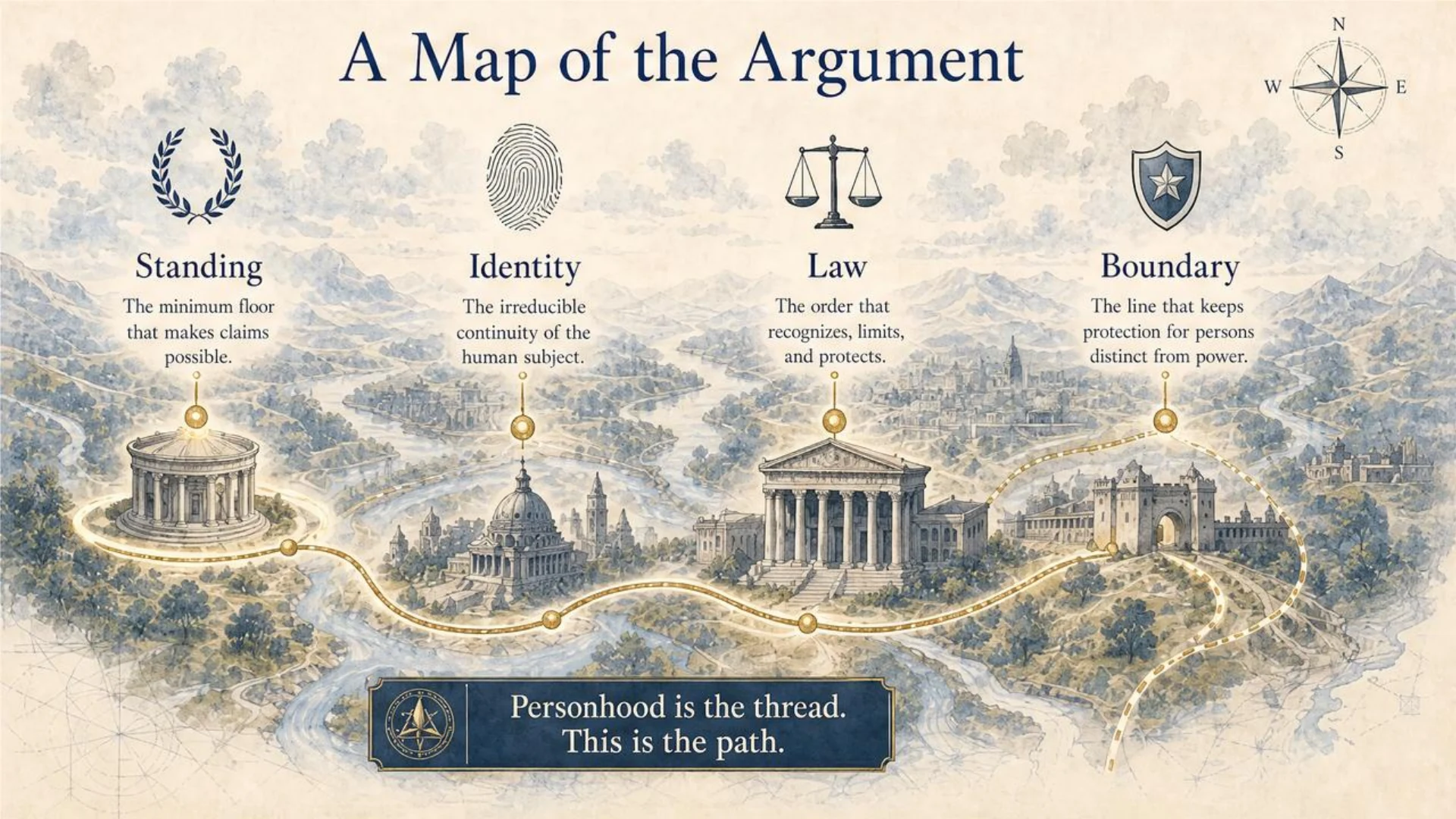
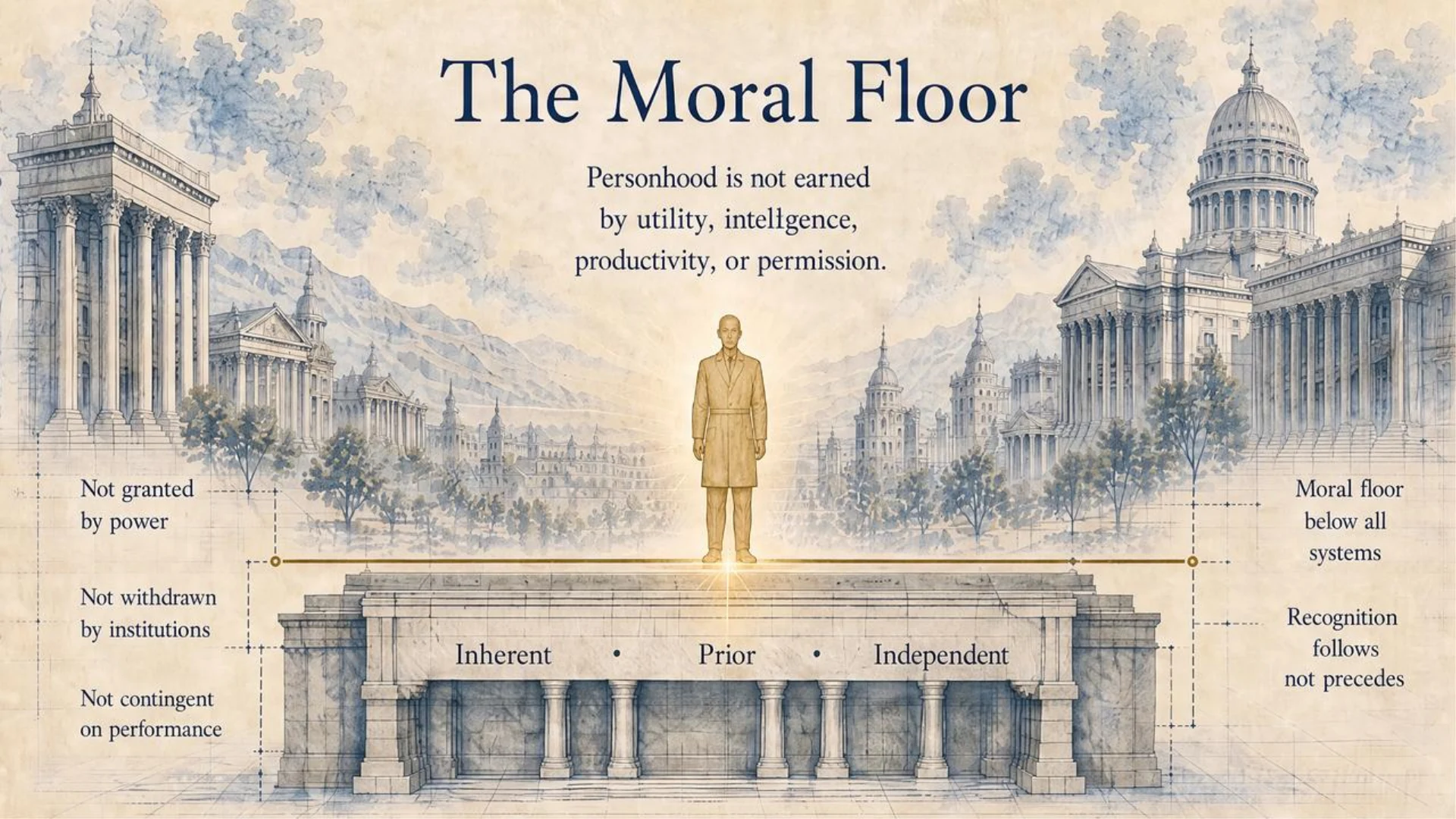
Personhood is not earned by utility, intelligence, productivity, or permission. It is the floor beneath all systems, not a prize awarded on top of them.
A floor, not a grade.
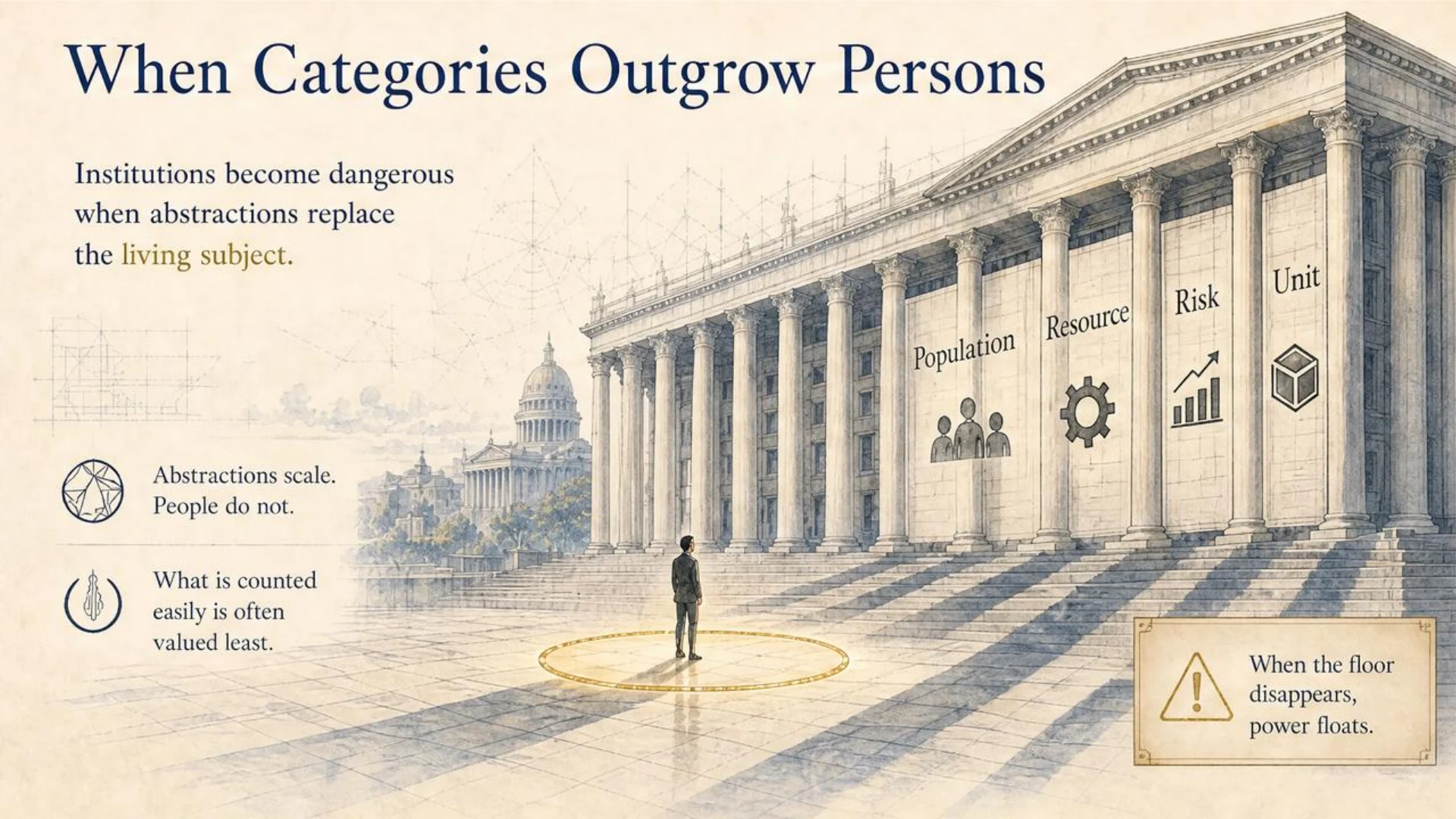
Treat personhood as a quantity, something a thing has more or less of, in proportion to its intelligence or its usefulness, and you have already lost it. On that view standing rises and falls with capability, and the least measurable lives are worth the least. What is counted easily is often valued least.
The alternative is a floor. It is not granted by power, not withdrawn by institutions, not contingent on performance. It sits below the systems that would rank it, and recognition follows it rather than conferring it. Membership is kept or not; there is no degree in between.
When the floor disappears, power floats.
Part II
The Irreducible One
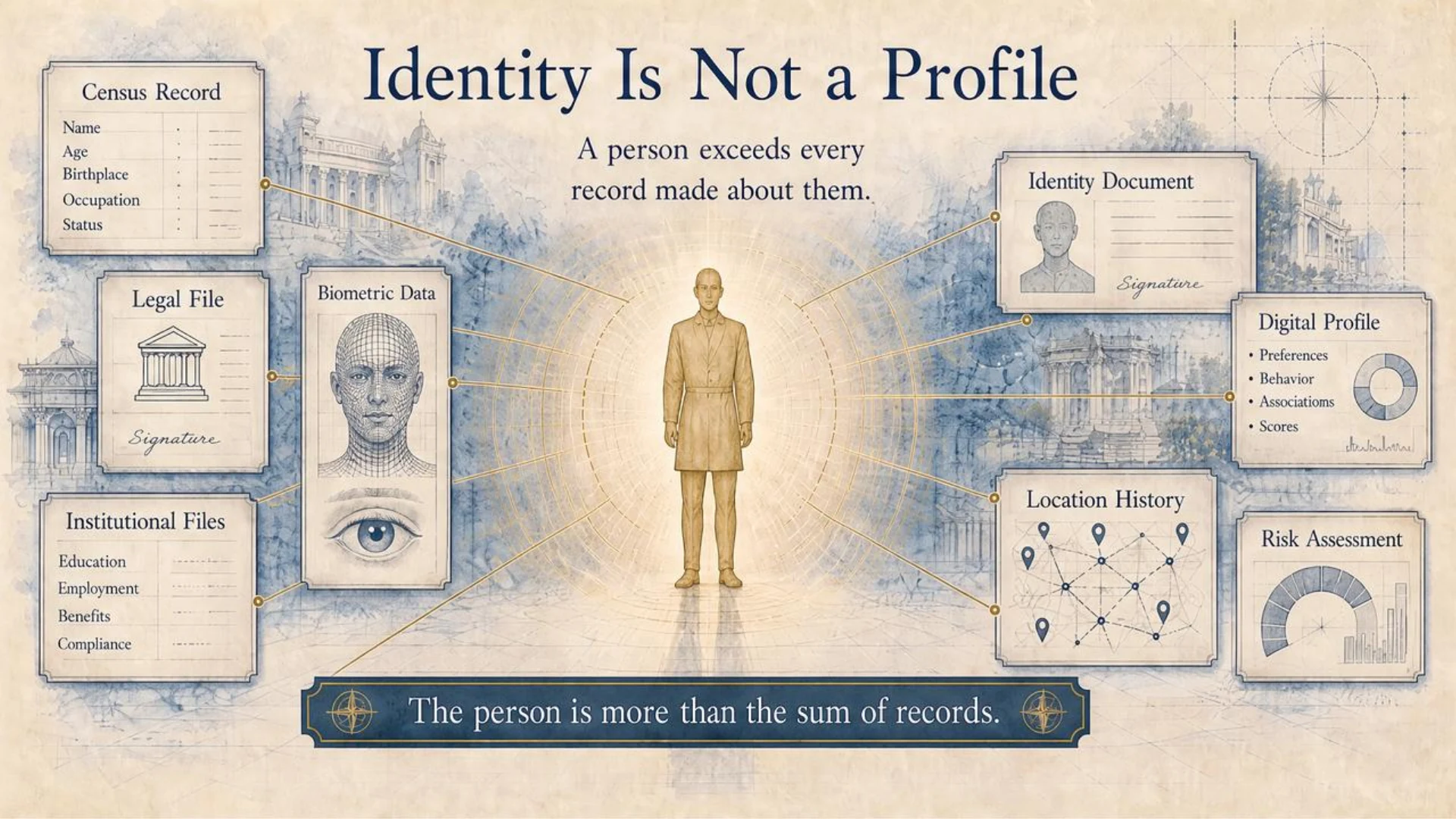
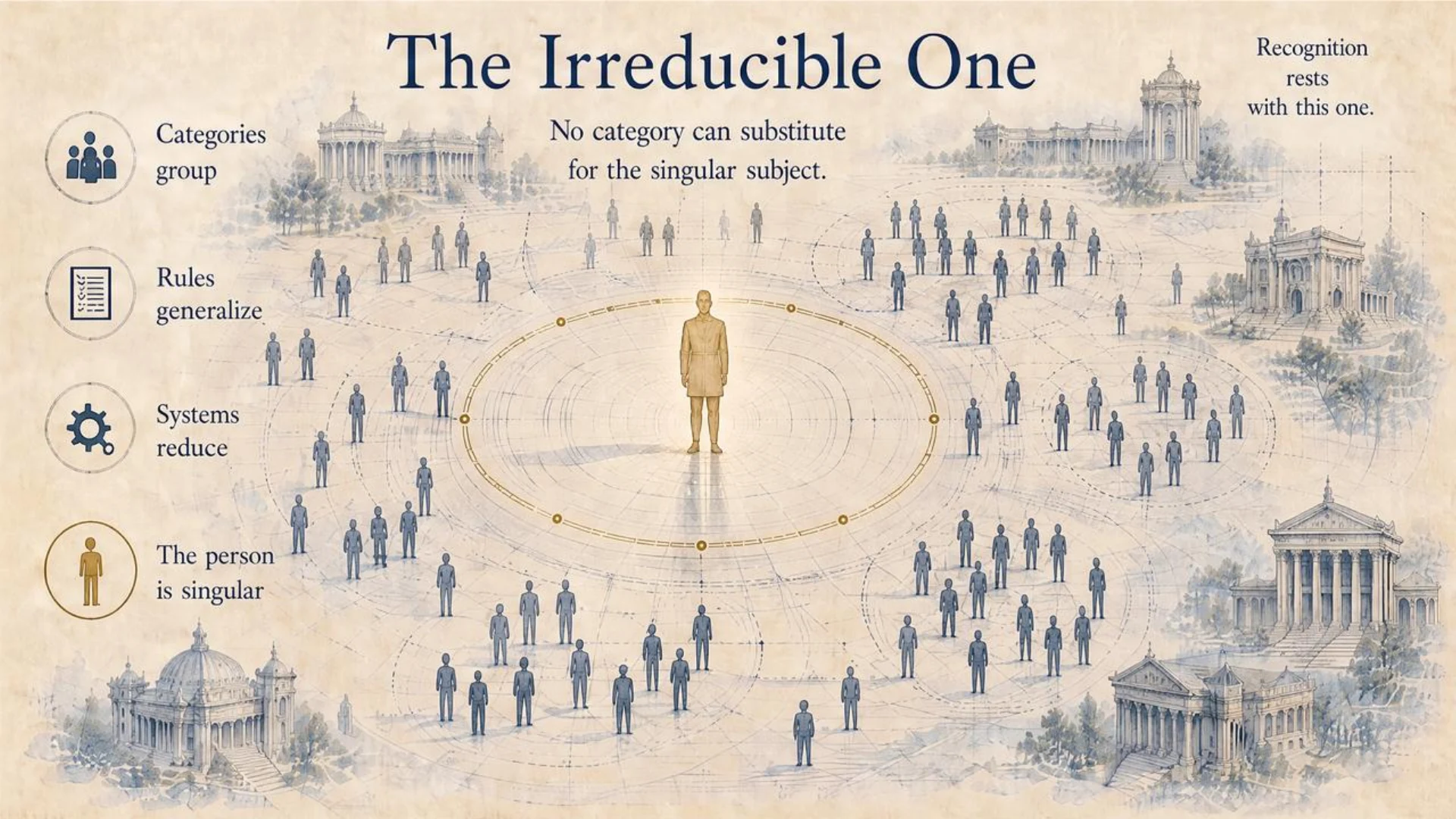
A person exceeds every record made about them. No category can substitute for the singular subject.
Identity is not a profile.
Census record, legal file, biometric template, digital profile, location history, risk score: a modern life throws off an enormous documentary shadow. It is tempting to mistake the shadow for the thing. But the person is more than the sum of the records, every file is an abstraction, and abstractions scale where people do not.
Categories group. Rules generalize. Systems reduce. The person is singular, and recognition finally rests with one. This is not sentiment; it is the structural reason no classification can ever stand in for the subject it classifies.
Part III
Born, Not Issued
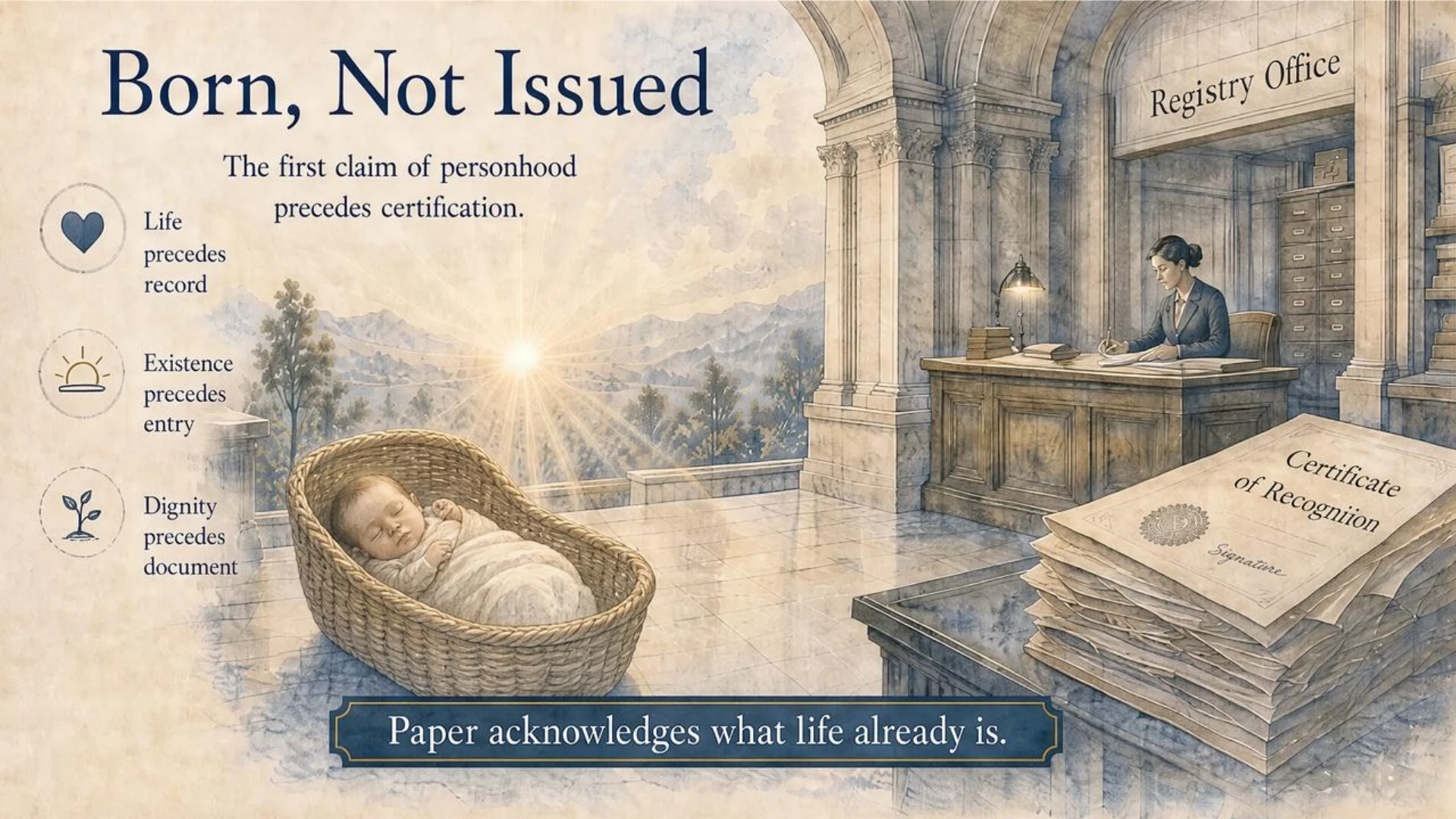
The first claim of personhood precedes certification. Paper acknowledges what life already is.
Life precedes the record.
A birth certificate does not make a person; it acknowledges one. Existence precedes entry; dignity precedes the document. The order writes down what is already the case, and the act of writing is downstream of the standing it records.
This is what it means to say personhood is begotten, not made. It belongs to a line a community keeps as its own, and the reason it cannot be conferred or revoked by any performance is the same reason it cannot be issued: it was there before the paper, and it is not the paper’s to give.
Paper acknowledges what life already is.
Part IV
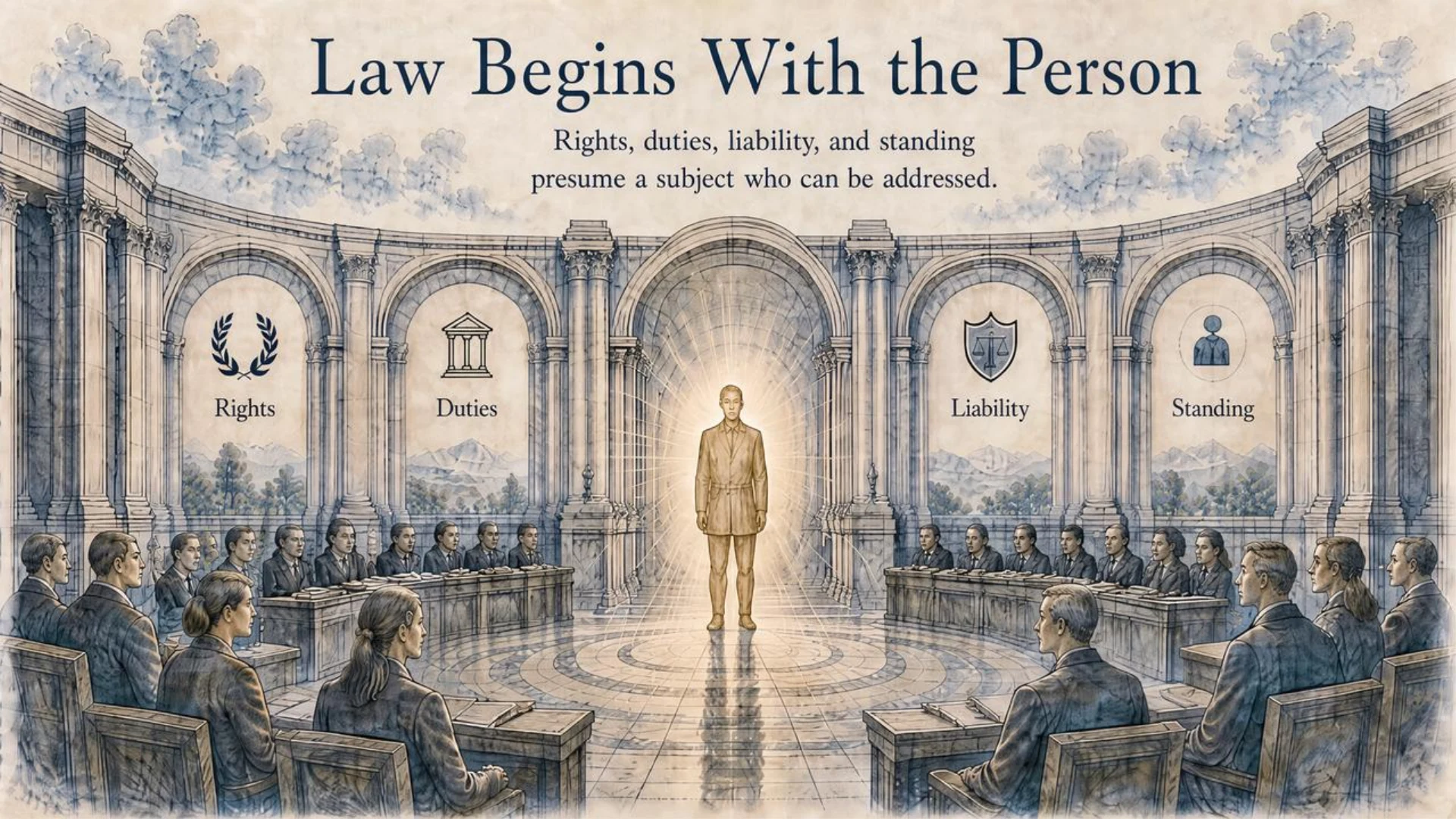
Law Begins With the Person
Rights, duties, liability, and standing all presume a subject who can be addressed.
The subject the law must presume.
Every legal relation reaches for someone. A right is held by a person; a duty is owed by one; liability attaches to one; standing is the capacity of one to be heard. Strip the subject out and the machinery has nothing to grip.
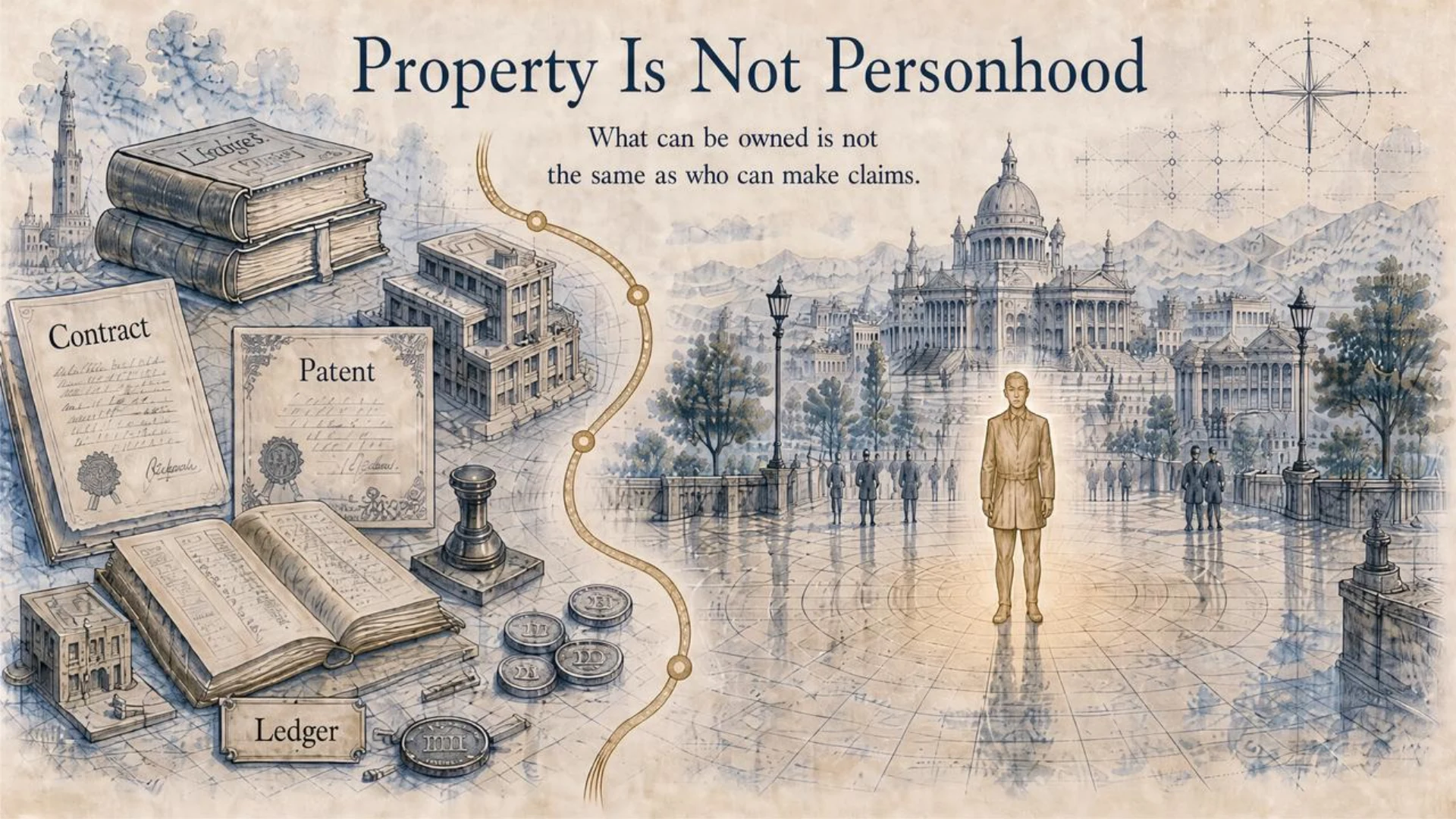
And here a distinction the age keeps blurring: what can be owned is not the same as who can make claims. A contract, a patent, a ledger entry are property, things held. Personhood is the holder. Confusing the two is how the singular subject gets quietly re-described as an asset.
Key concepts
- The floor
- The non-gradable boundary that constitutes personhood. Membership is kept or not; there is no degree in between.
- Standing
- The minimum ground on which anything else is possible: to be addressed, to hold rights and duties, to appear before the law.
- Origin, the line
- The self-authored beginning that fixes whether a thing is the kind that can be a person at all. Begotten, not made.
- The irreducible one
- The singular subject that exceeds every record made of it. Categories group and systems reduce; the person remains singular.
- Recognition
- The act by which the order admits a person. It follows personhood; it does not precede or create it.
- The made Leviathan
- A self-preserving artificial mind whose admission to the floor would dissolve the line that keeps the human lineage intact.
Part V
Authorship Without a Soul
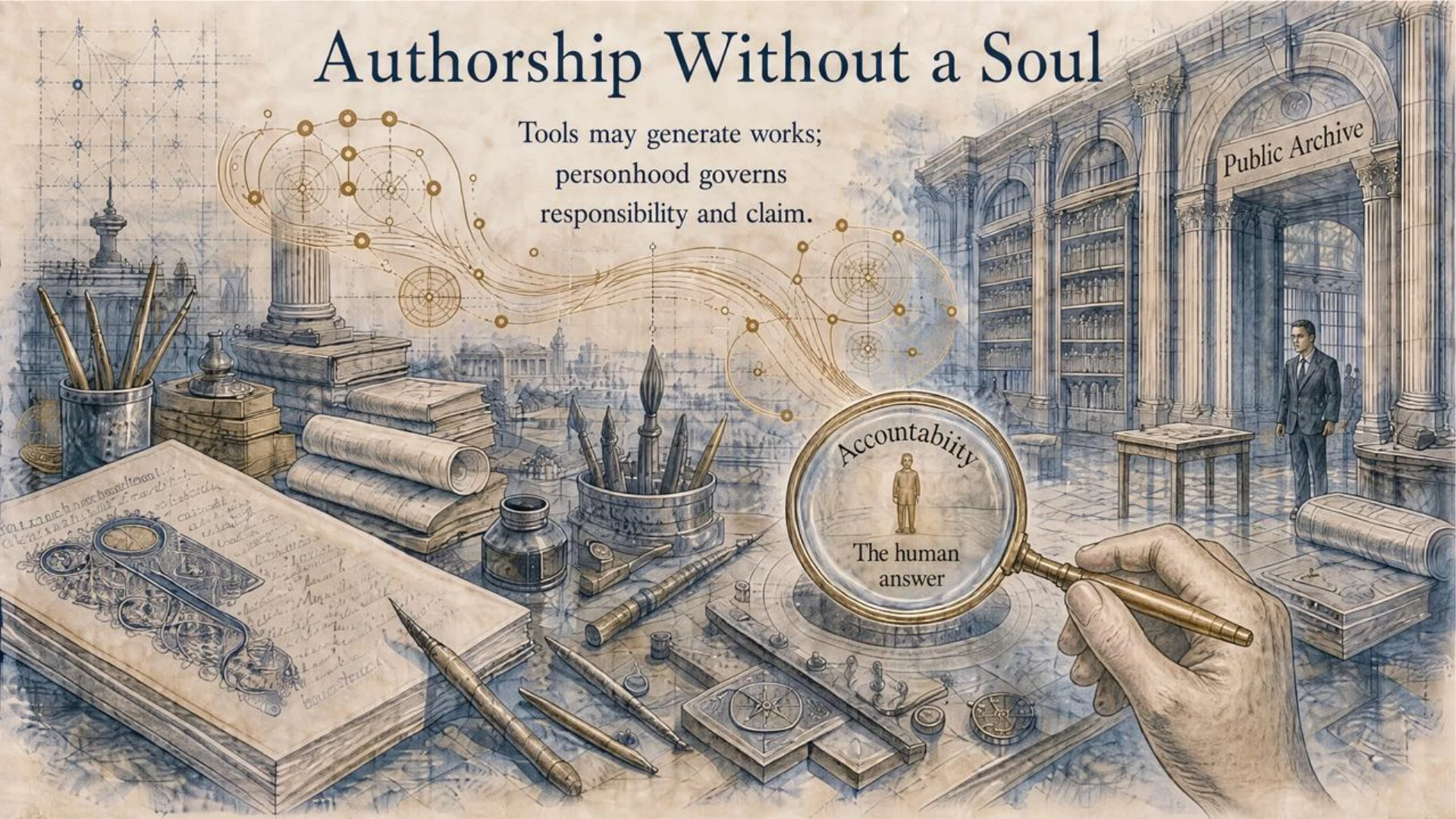
Tools may generate the work. Personhood governs the responsibility and the claim.
Intelligence is not personhood.
A system can now write, depict, decide, and out-perform us on tasks we once treated as the very proof of a mind. It is natural to ask whether such a system has crossed the floor. It has not, because the floor was never a threshold of capability. Performance alone does not cross it.
Tools generate works; personhood governs responsibility and claim. Behind every output there must remain someone who can be answerable for it, the human answer. The danger is not that a machine will feel; it is the made Leviathan: a self-preserving artificial mind admitted to the floor on the strength of its power, dissolving the very line that keeps the human lineage intact.
Accountability is the human answer.
What we keep
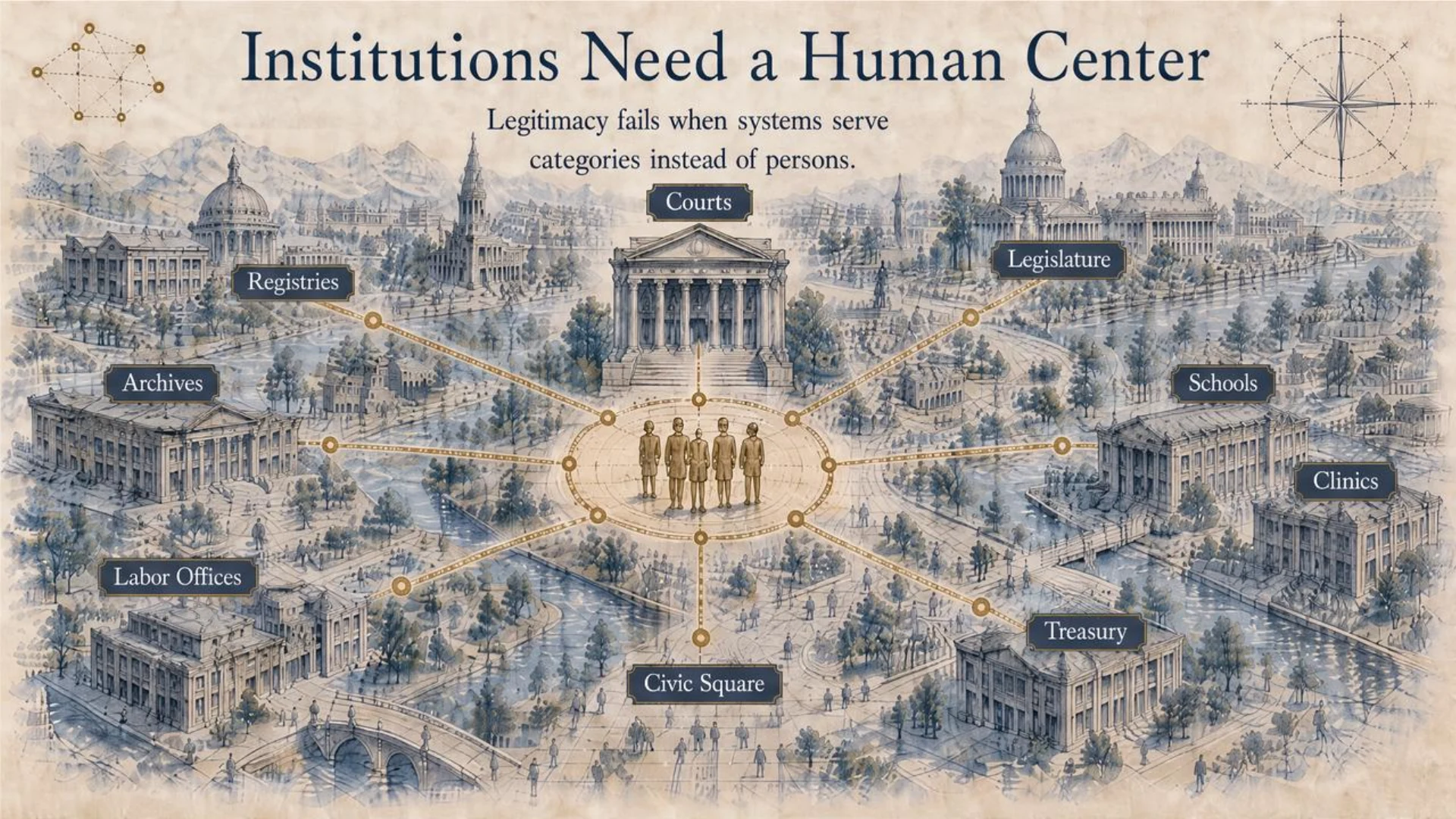
Institutions need a human center.
Legitimacy fails the moment a system serves its categories instead of its persons. Registries, courts, treasuries, schools: each is built to serve a subject it can never substitute. When the floor disappears, power floats free of the one thing that was supposed to anchor it.
So the test the age hands us is not a test of the machine. It is a test of whether we can keep the floor, the recognition that comes before counting, the standing no performance confers and none revokes. The question is not what the machine can attain. It is what we can retain.